
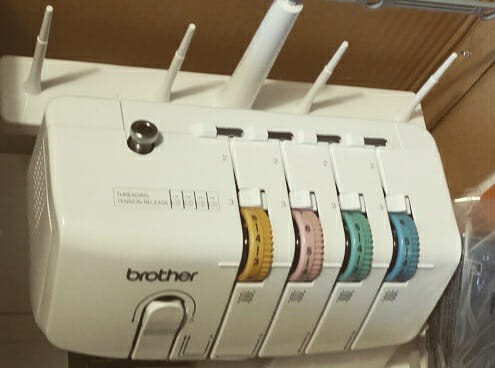
A serger is a sewing machine used for overcasting to prevent material from fraying at the edge. Okay, that’s the definition, but if you are new to sewing then that probably doesn’t make any sense to you at all.
Let’s back up and start with the basics.
When you are sewing, you are just joining material together, like tying a bunch of knots with thread to keep two things together.
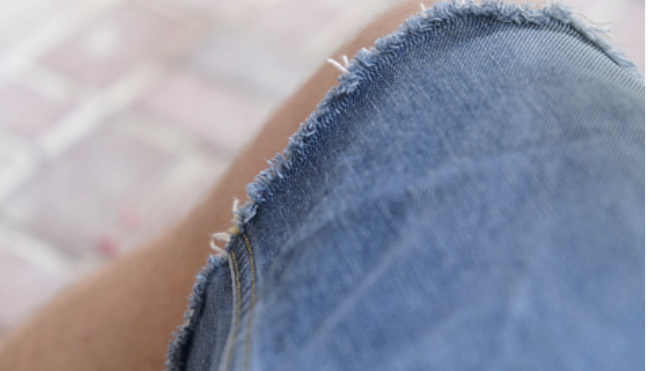
I’m a 90’s kid, so I remember cutting my blue jeans at the bottom.
Did you do this?
Anyway, it was the style to get that frayed look at the cuff of your jeans. That is naturally what most material does when you cut it. It will fray. A serger will “serge” your materials together in a way that will prevent them from fraying. Some sergers even cut the excess material at the same time.
What does an overlock stitch have to do with a serger?
That is the name of the stitch that a serger makes to bring two pieces of material together by sewing over the edge so there is no fraying. Serger vs overlock: a serger is sometimes called an overlock sewing machine. They are the same thing, just different names.
Are you now asking yourself how to use a serger?
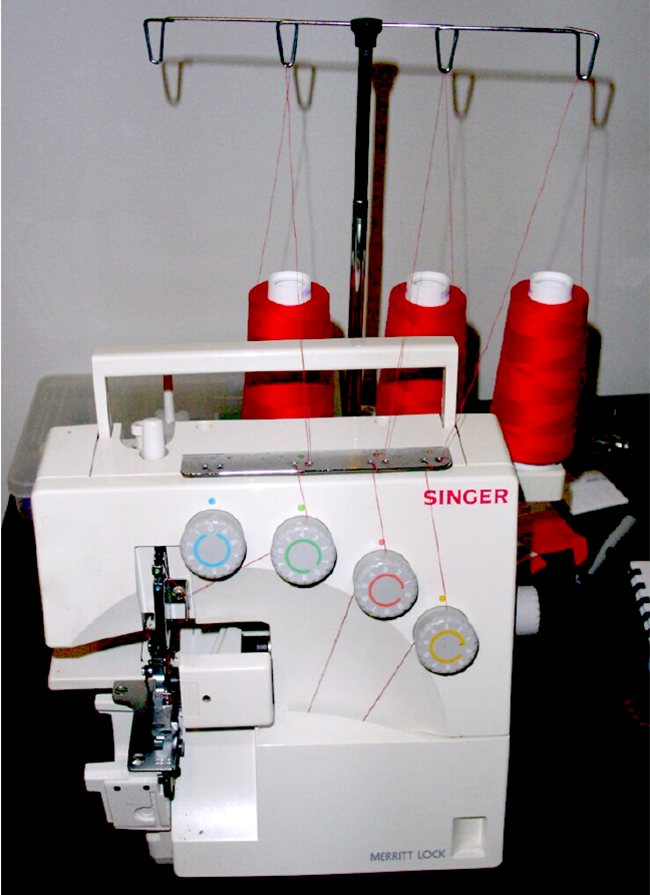
Since there are a variety of sergers, I would suggest you read the manual of the serger you purchase. There are instructions and illustrations on how to thread a serger within your manual.
My best tip is when threading a serger, you must make sure you connect to each of the spools correctly. If I were you, I would look for a self-threading serger. All you do is put the thread in the threading guide and flip a switch.
Wow!
That would save so much time, don’t you think? Also, my favorite needles would be the Singer serger needles. You can find those in any craft store at a very affordable price.
What is serging?
Serging is the process of connecting two pieces of material together and securing the edges with multiple threads.
How does a serger work?
It uses more than one needle to create a stitch that knots together over the edge of the material being sewn. It has mechanical fingers below the machine and needles on top to wind thread around the side of the fabric.
There are different types of stitches with a serger depending of the type of material you are working with and also what type of finish you want. A 4 thread serger is a serger that uses 4 spools of thread to create the overlock stitch (shown below).
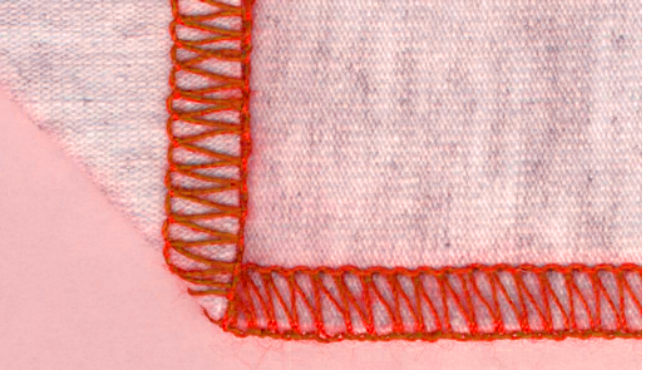
The more threads, the more flexible and strong the seam. A 5 thread serger is the best one and type of stitch. It creates the strongest stitch when comparing sergers.
Let’s compare: serger vs sewing machine.
What does a serger do? It is a separate machine that does several types of overlocking stitches. Here are the most common features:
- trim excess material as it sews
- create rolled hems
- overcast raw edges
- with one pass, secure and finish seams
- create flatlock seams
- customize stitch with multiple needles and thread based on weight of material
The trim feature keeps the edge of the fabric clean before it is stitched by cutting it with a knife. It can perform a variety or things that a sewing machine would not be able to do.
Some expert seamstresses prefer them over a sewing machine. The multiple threads help keep the seams secure and that is necessary when sewing professionally. If I could, I would invest in an industrial serger!
Could you imagine? Industrial sergers can run from speeds of 1,000 to 9,000 rpm! Advanced sergers can do what regular sewing machines can do as well as the edges of fabrics.
Now, let’s see how a sewing machine works. Here are the features of most sewing machines:
- button sewing
- hole mending
- multiple stitch sizes
- feed dog adjustment
- thread cutter
- multiple attachments
Alright, so a sewing machine has a lot of features too! There is actually an attachment called and overlock that you can use on a plain sewing machine.
It serves the same purpose as a serger to an extent. Keep in mind that it may not be as strong and it is not able to use multiple threads like a serger. The seams will not be as flexible too.
I know that was a LOT of information, but I hope that you now have a better understanding of what a serger is, what it does, and even how to use it.
One cool thing about a serger is you can run the stitch without any material in the feeder to see how the stitch looks. I would suggest using multiple colors of thread so the stitch is clearly visible.
Since a serger can do what a regular sewing machine can do as well as the overlock stitch, then that sounds like the machine for me. I am a multi-tasker, so why not just have one machine that can do it all, am I right?
featured image from https://www.flickr.com/photos/dana-k/15870675939